
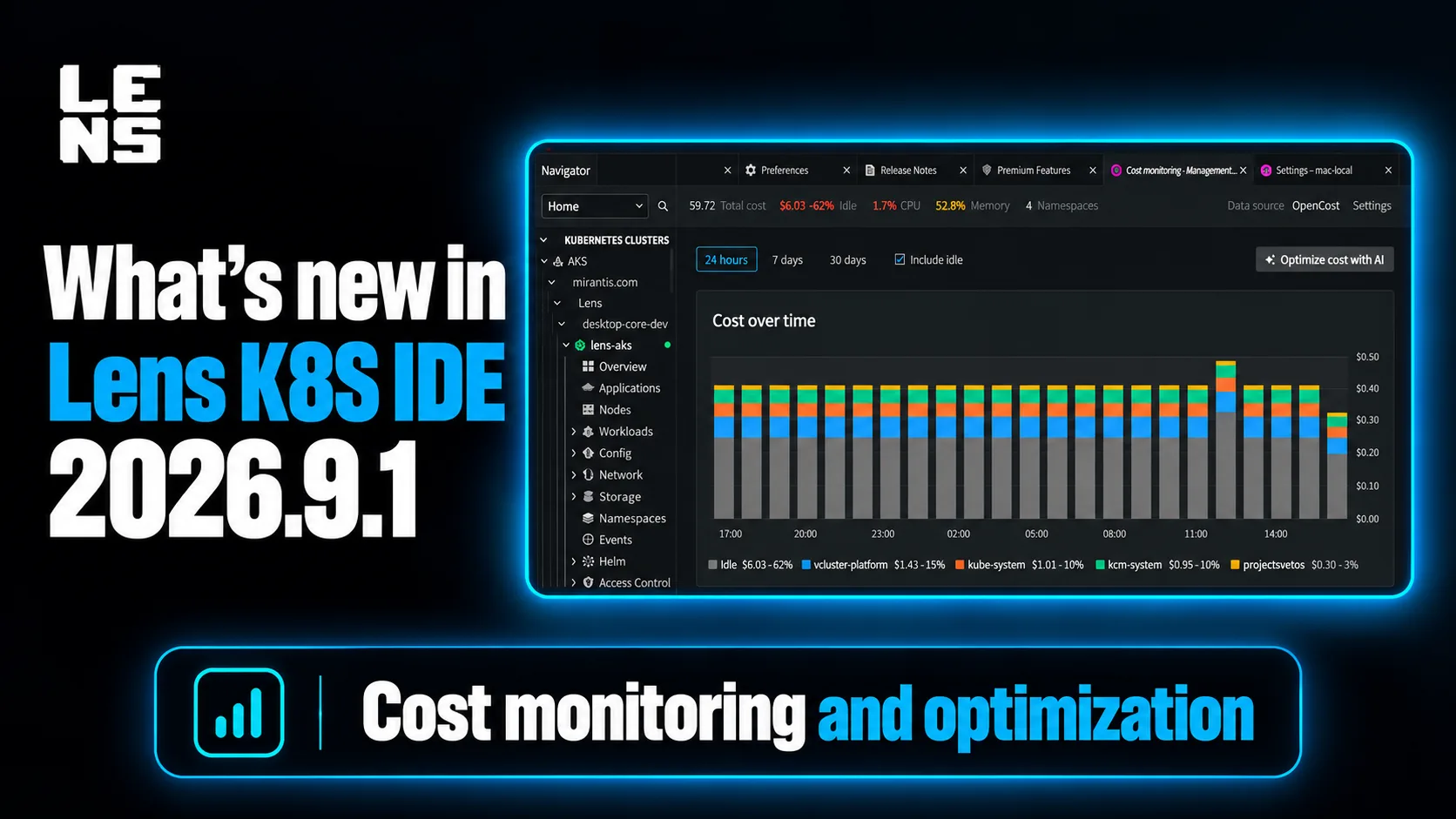
What's new in Lens K8S IDE 2026.9.1: Cost Monitor & Optimization
Cost Monitoring breaks cluster spend down per namespace with nothing installed on the cluster, plus VictoriaMetrics auto-detection and Azure Government support.
Yalton Ruiz4 min read
Blog
18 posts from Team Lens.
Cost Monitoring breaks cluster spend down per namespace with nothing installed on the cluster, plus VictoriaMetrics auto-detection and Azure Government support.
Yalton Ruiz4 min read
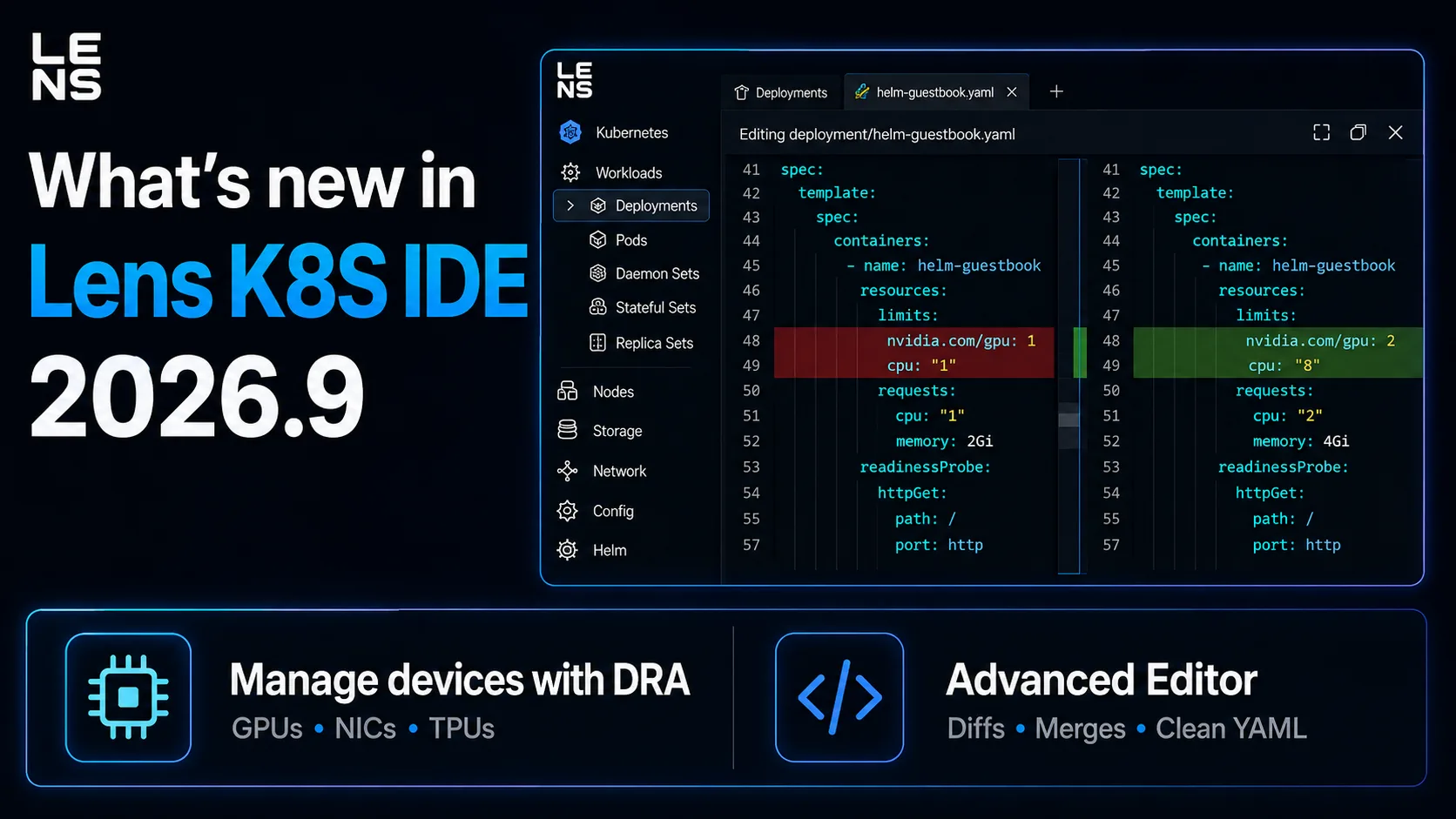
Lens K8S IDE 2026.9 brings Kubernetes DRA to the navigator for managing devices like GPUs and NICs, plus an advanced editor for editing YAML manifests.
Yalton Ruiz4 min read
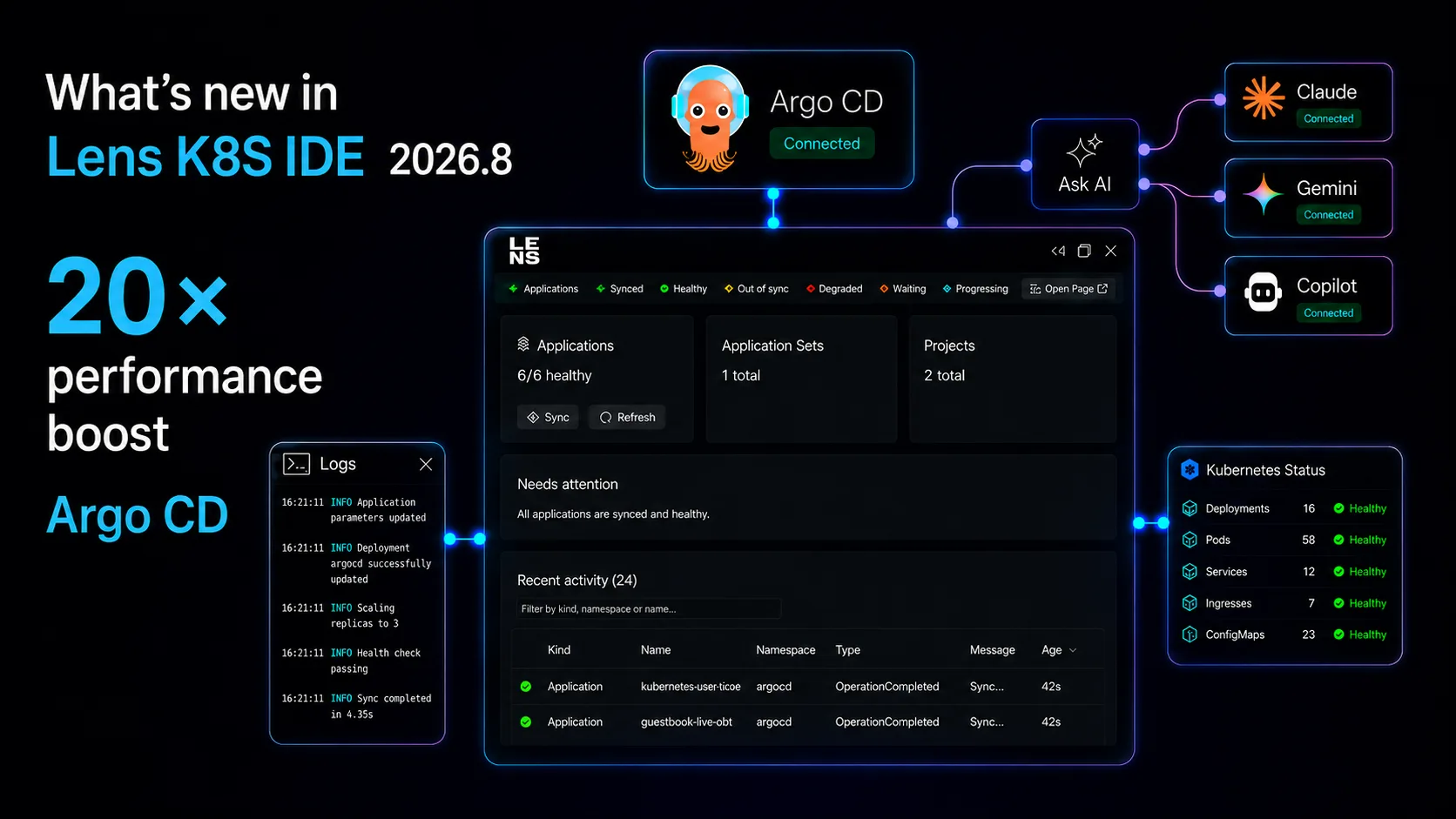
Lens K8S IDE 2026.8 is up to 20× faster on large clusters and brings Argo CD GitOps into the navigator, with one-click Sync, Refresh, and Ask AI.
Yalton Ruiz2 min read
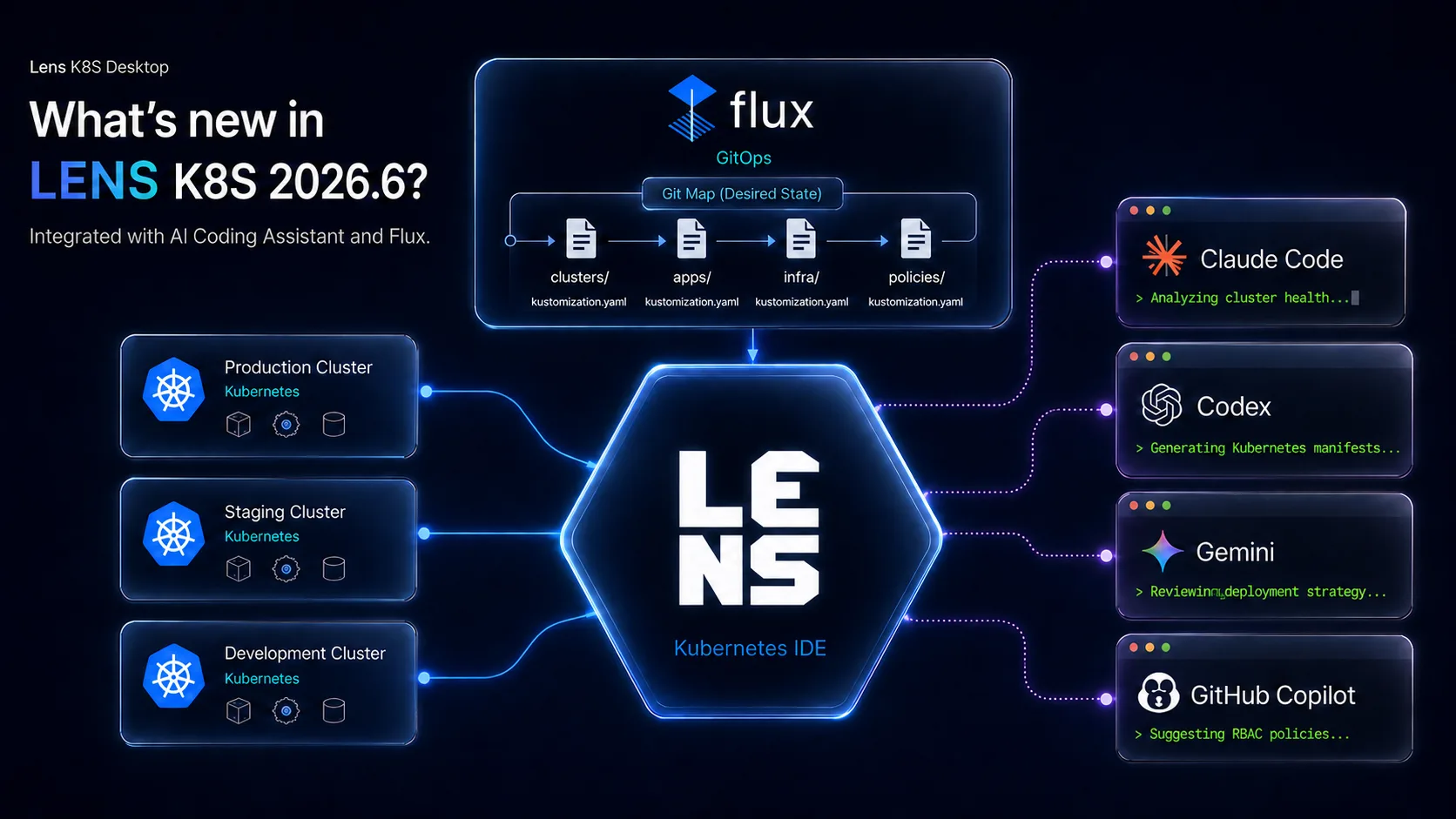
Lens Prism has evolved: You can run the AI agent you already use, Claude Code, Codex, GitHub Copilot CLI, or Gemini CLI, right inside Lens, without needing to bring your own API key.
Yalton Ruiz5 min read
Lens Experimental Features let you try out new functionality that is still in development, a new opt-in delivery mechanism that ships features to Lens Kubernetes IDE outside of the normal release cycles.
Flavius Dinu4 min read
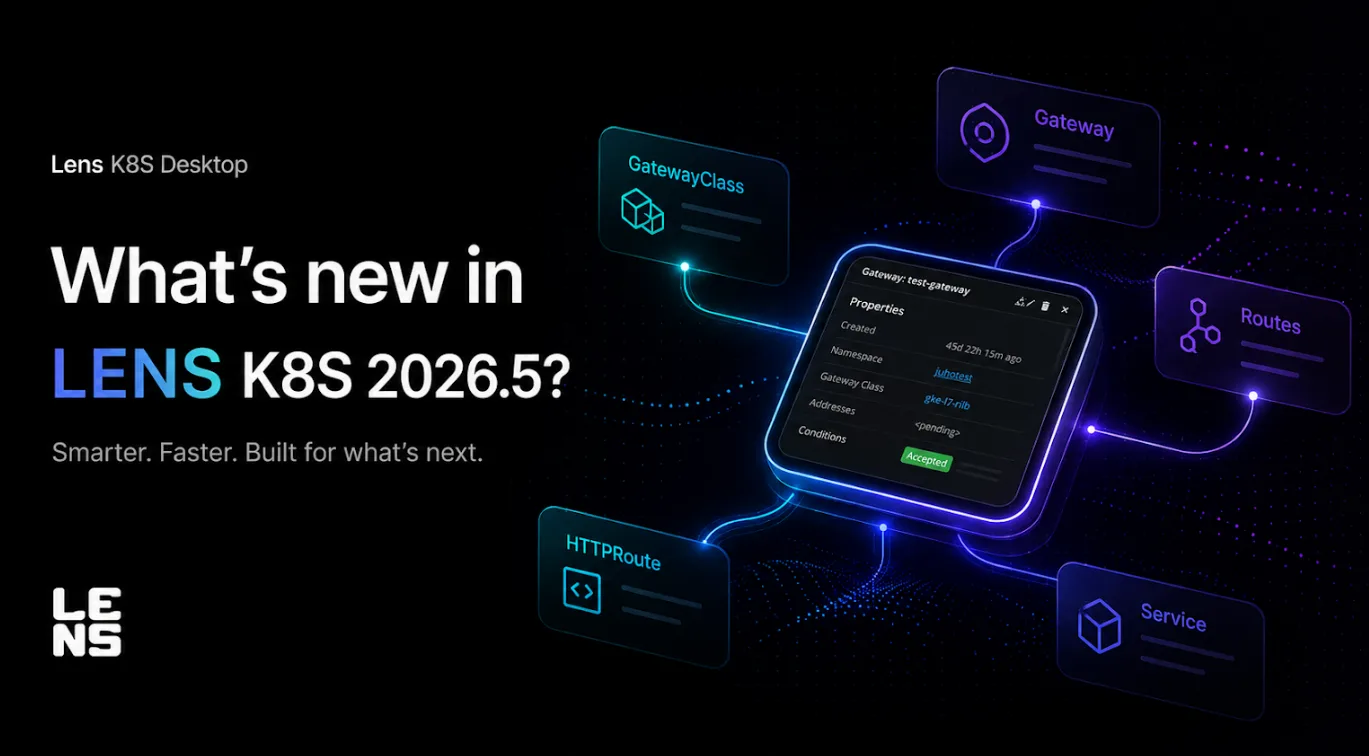
Lens Desktop 2026.5 comes equipped with Navigator support for the Kubernetes Gateway API, support for Kubernetes Admission Policies, and Premium Features dashboard updates for the Lens Plus trial.
Yalton Ruiz5 min read
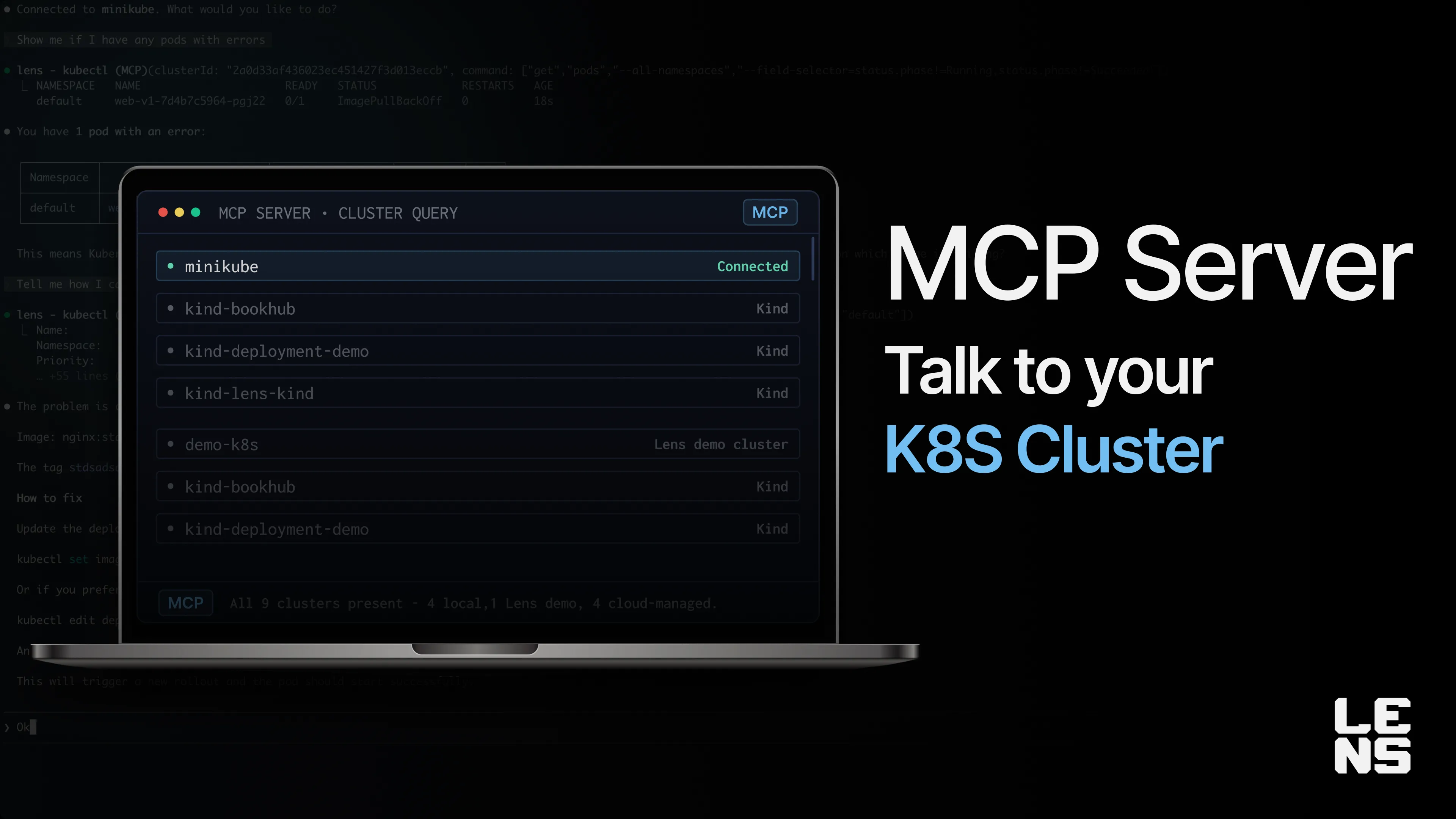
Lens Kubernetes IDE now offers its own MCP server that makes it easy for AI assistants to communicate with the Kubernetes clusters you have added in Lens K8s.
Flavius Dinu6 min read
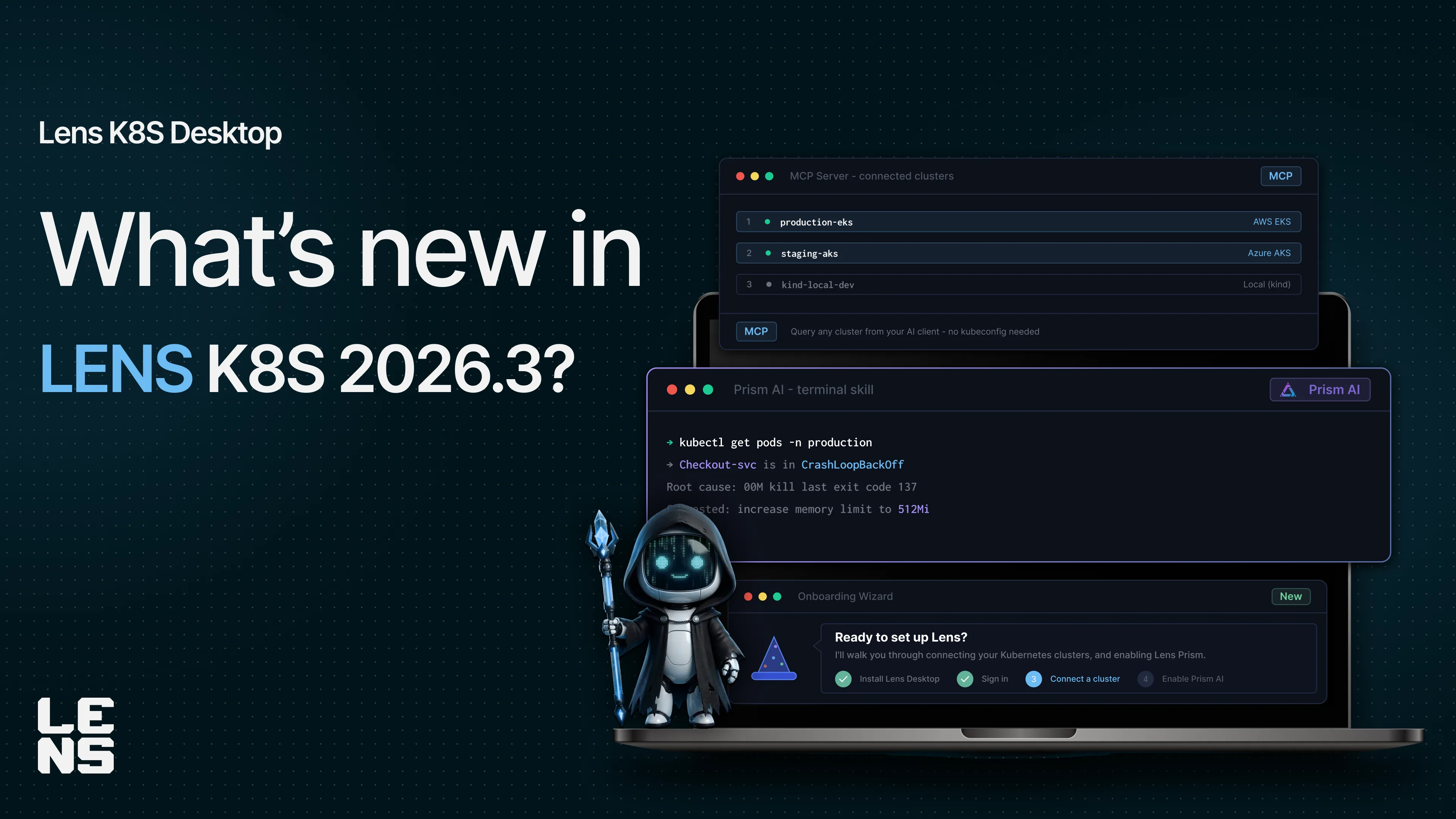
AI is reshaping how we manage our Kubernetes clusters, and Lens K8s IDE is here to help. This release brings deeper AI integration with a new MCP Server, an upgraded Lens Prism that can act on your behalf, and tools to get new users productive from day one.
Flavius Dinu4 min read
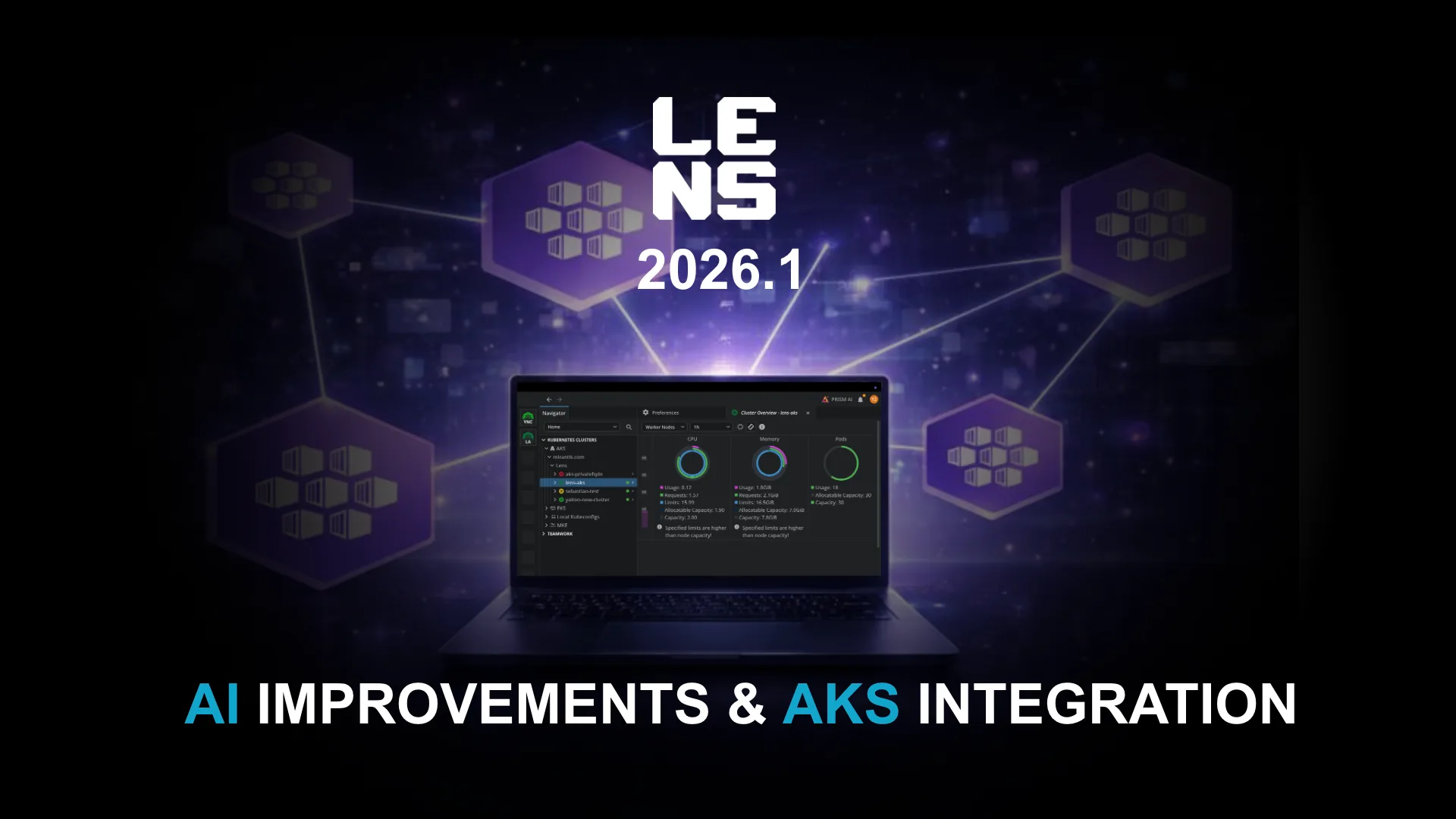
Lens Desktop 2026.1 has been released and is now available to download. It helps platform and DevOps teams operate Kubernetes more efficiently with native Azure AKS integration, Prism AI improvements, and UX updates.
Yalton Ruiz3 min read
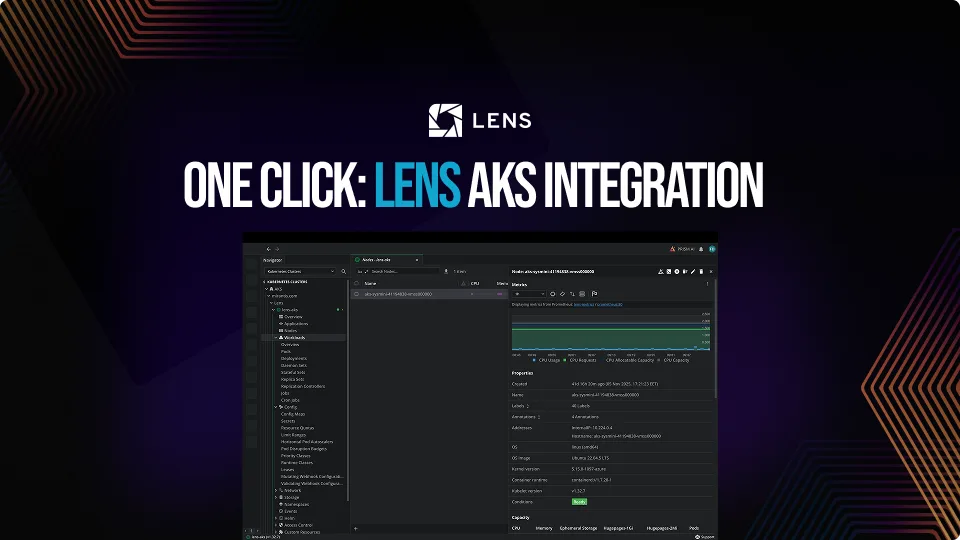
Lens Kubernetes IDE now offers one-click Azure AKS integration, allowing users to automatically discover and access all their AKS clusters without manual kubeconfig configuration, dramatically reducing setup time for managing multiple Kubernetes clusters.
Flavius Dinu4 min read
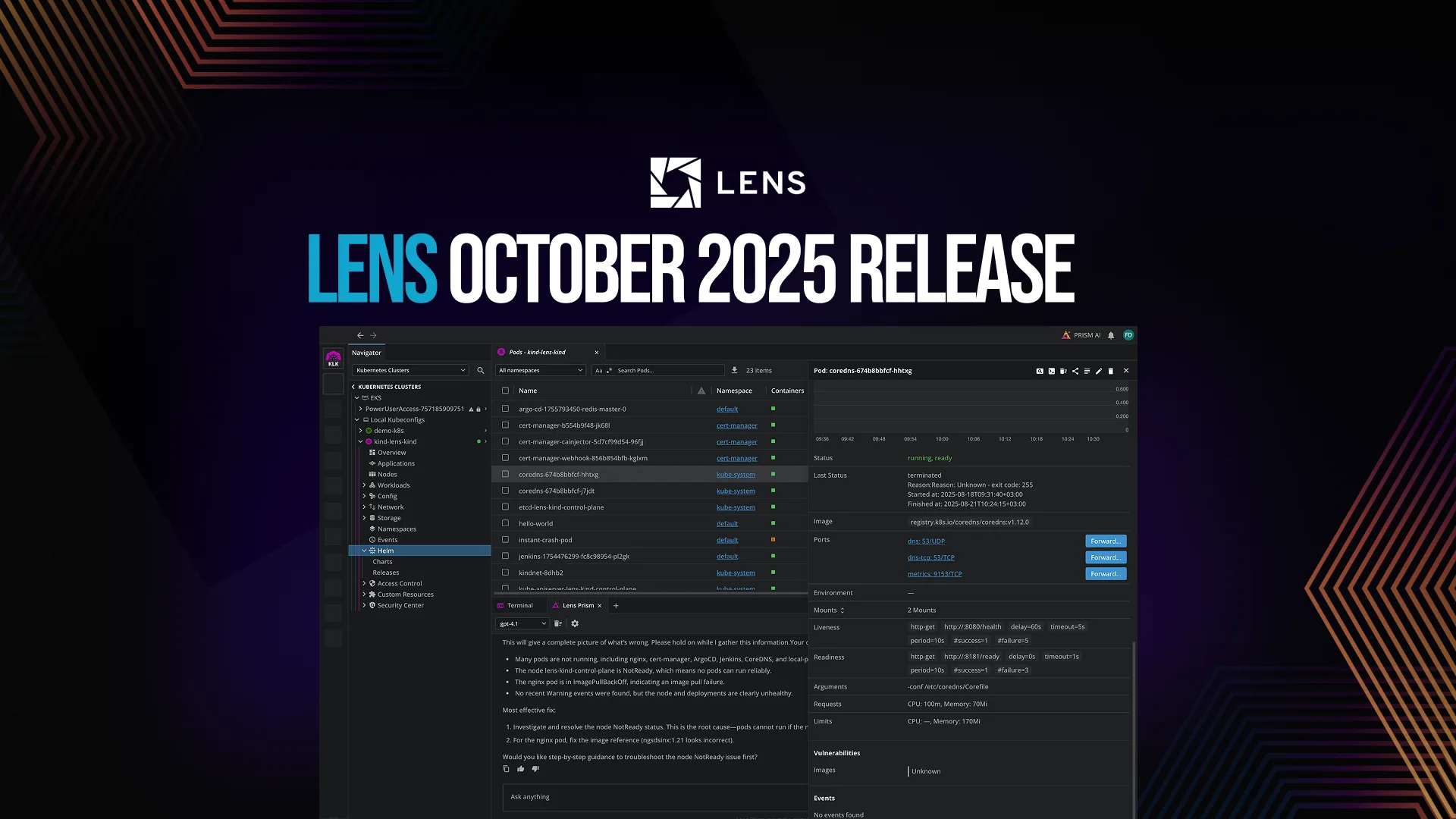
We are proud to announce a new stable release of Lens Desktop that features major improvements to Lens Prism, along with enhancements to AWS EKS integration and the log viewer.
Flavius Dinu3 min read
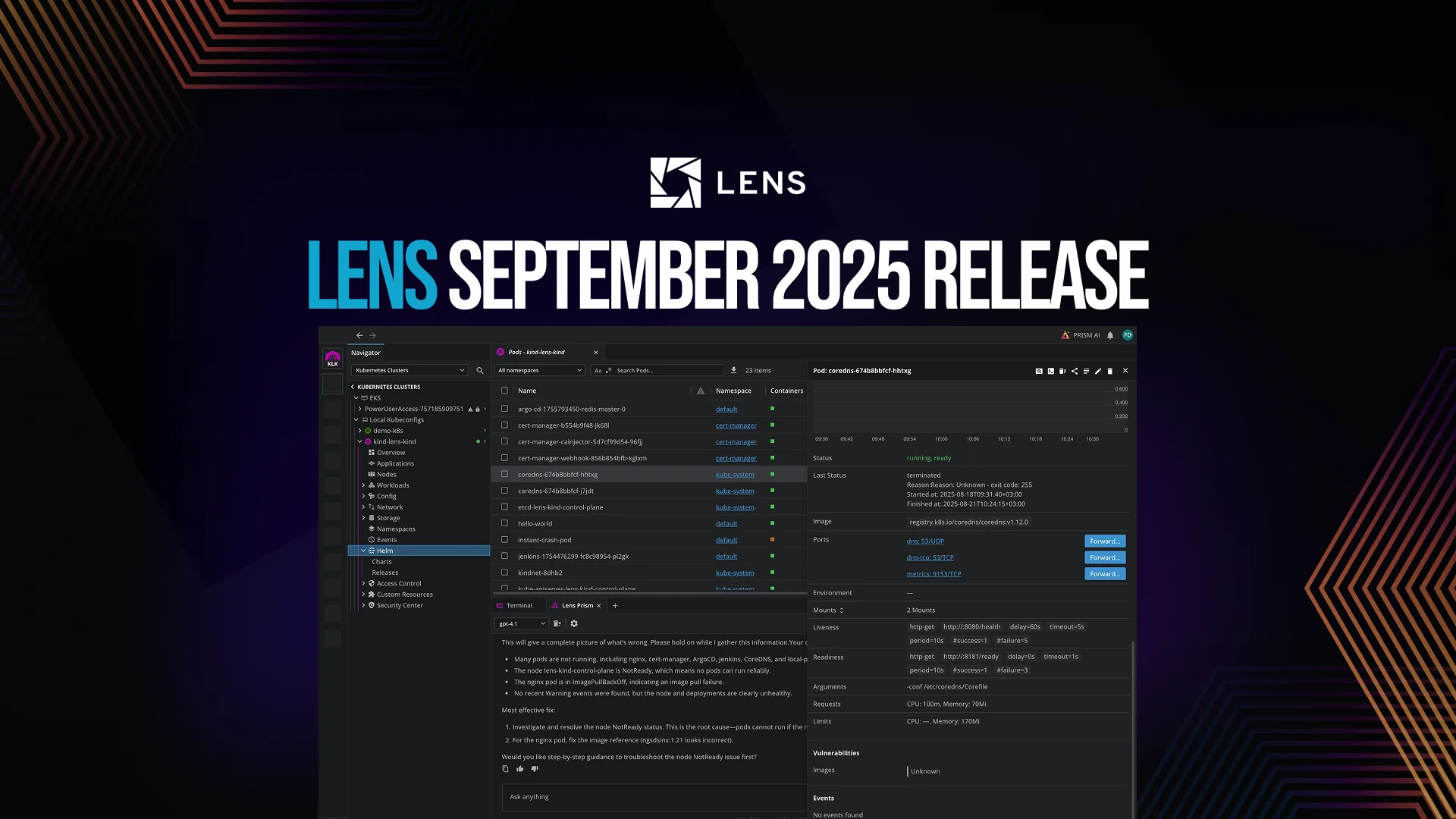
A new stable release of Lens Desktop featuring improvements to Lens Prism and AWS EKS integration, with UX enhancements and bug fixes.
Flavius Dinu3 min read
Lens already makes working with Kubernetes clusters easier. Now, we're removing one of the biggest roadblocks in the onboarding journey: connecting to your AWS EKS clusters.
Miska Kaipiainen4 min read
Lens Prism brings a context-aware AI assistant into the Kubernetes IDE, plus one-click AWS EKS integration — so you can talk to your clusters instead of memorizing kubectl.
Miska Kaipiainen7 min read
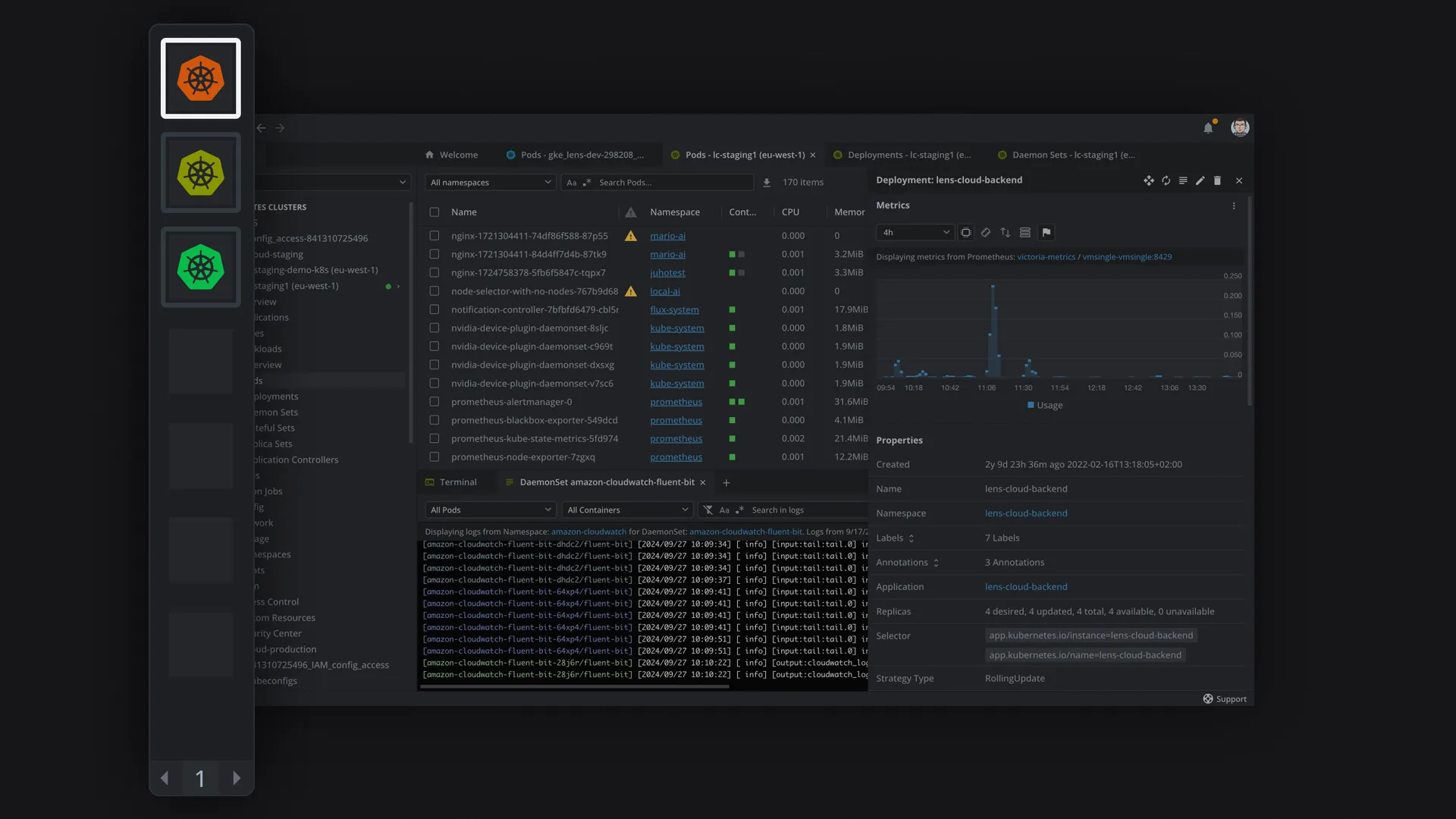
We're excited to announce the latest release of Lens Desktop, bringing back one of the most beloved features of all time - Hotbar - stronger and more powerful than ever.
Miska Kaipiainen4 min read
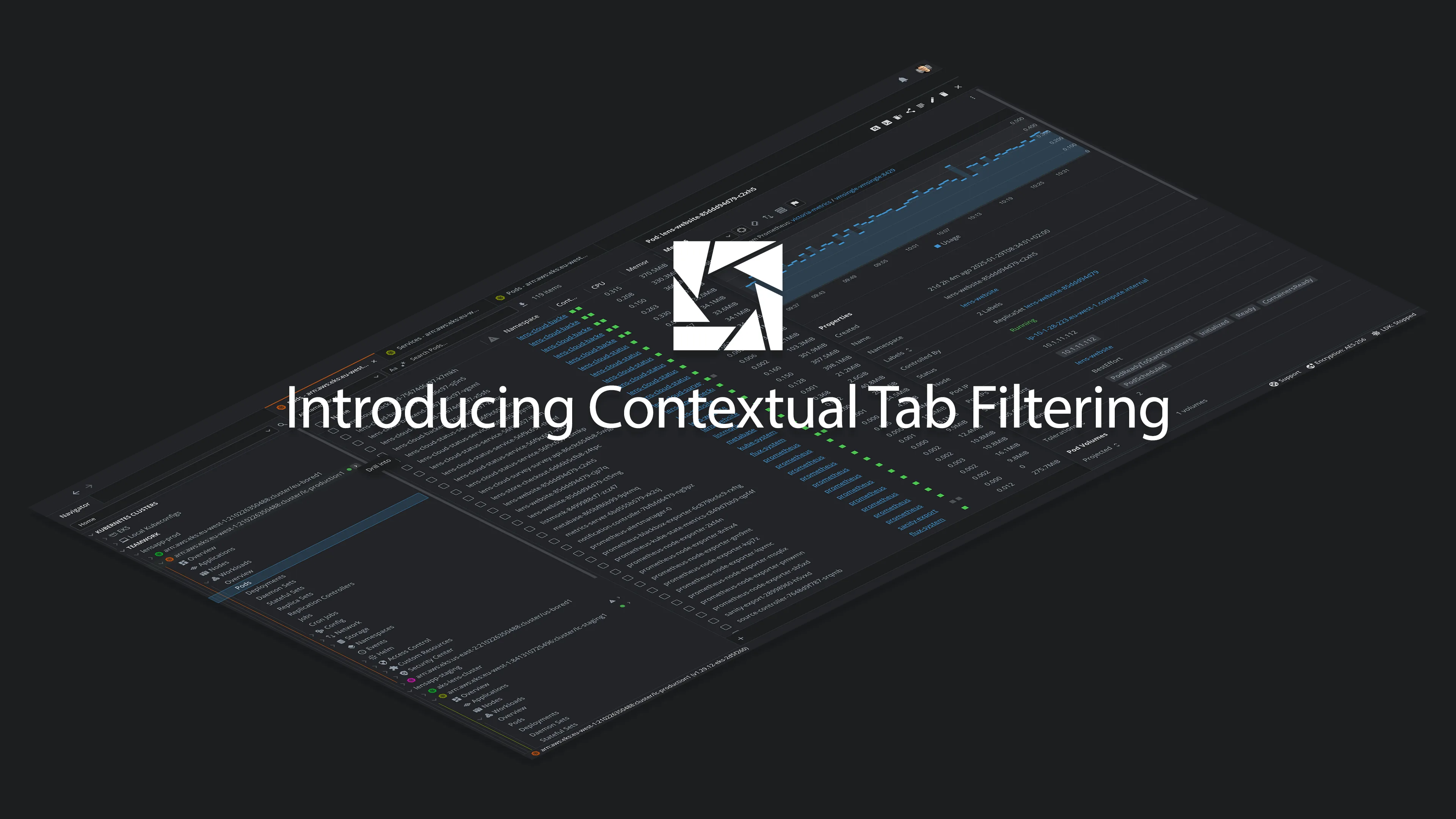
This update introduces Contextual Tab Filtering, a feature designed to help you stay organized while managing multiple clusters by ensuring only tabs relevant to your current context remain visible.
Miska Kaipiainen3 min read
With over a million individual users and 50,000 organizations using Lens, the latest version introduces a host of enhancements that transform how you interact with Kubernetes, making management more intuitive and efficient.
Miska Kaipiainen6 min read
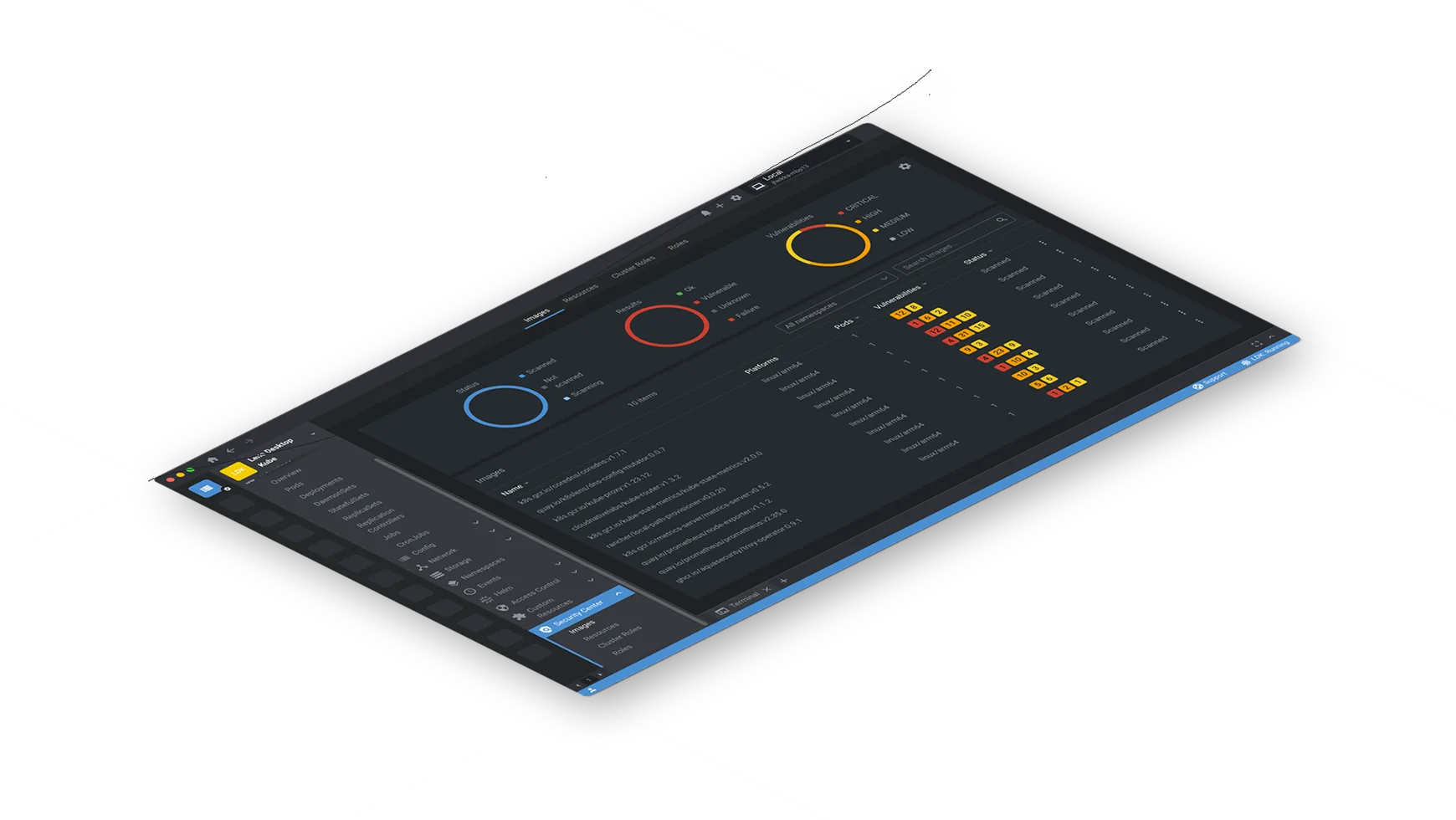
Security is of utmost importance for all organizations, and we understand that at Lens. That's why we're proud to introduce Lens Security Center, a feature that empowers Lens users to identify vulnerabilities and misconfigurations in their workloads and clusters with ease.
Lee Namba8 min read